The Critical First Step in Your Divorce: Understanding the Legal Documents
Staten Island Divorce Lawyers often hear the same question: “What’s the difference between a divorce petition and a summons?” If you’re starting the divorce process, these terms might seem confusing, but they’re absolutely essential to understand. You’re likely feeling overwhelmed, worried about your future, and unsure what each step means. If you mix up the divorce petition with the summons, it can delay your case or hurt your rights. But don’t worry—learning the basics gives you the confidence to move forward. In this guide, we’ll break down exactly what these documents are, how they fit into New York divorce law, and why choosing the right divorce lawyer makes all the difference for your Staten Island divorce case.
Navigating Divorce in Staten Island: Why the Right Documents Matter
If you’re planning to file for divorce or have just been served, you need to know which paperwork starts the process and what each document does. The two main legal forms that open a divorce case in New York are the Summons and the Divorce Petition (also called the Complaint in some courts).
Misunderstanding these papers can lead to lost time, extra expenses, or even missed legal rights. The right divorce attorney in Staten Island ensures you don’t fall into these traps. Here’s a closer look at how these documents work.
The Divorce Summons: Official Notice of a Legal Action
What is a Divorce Summons?
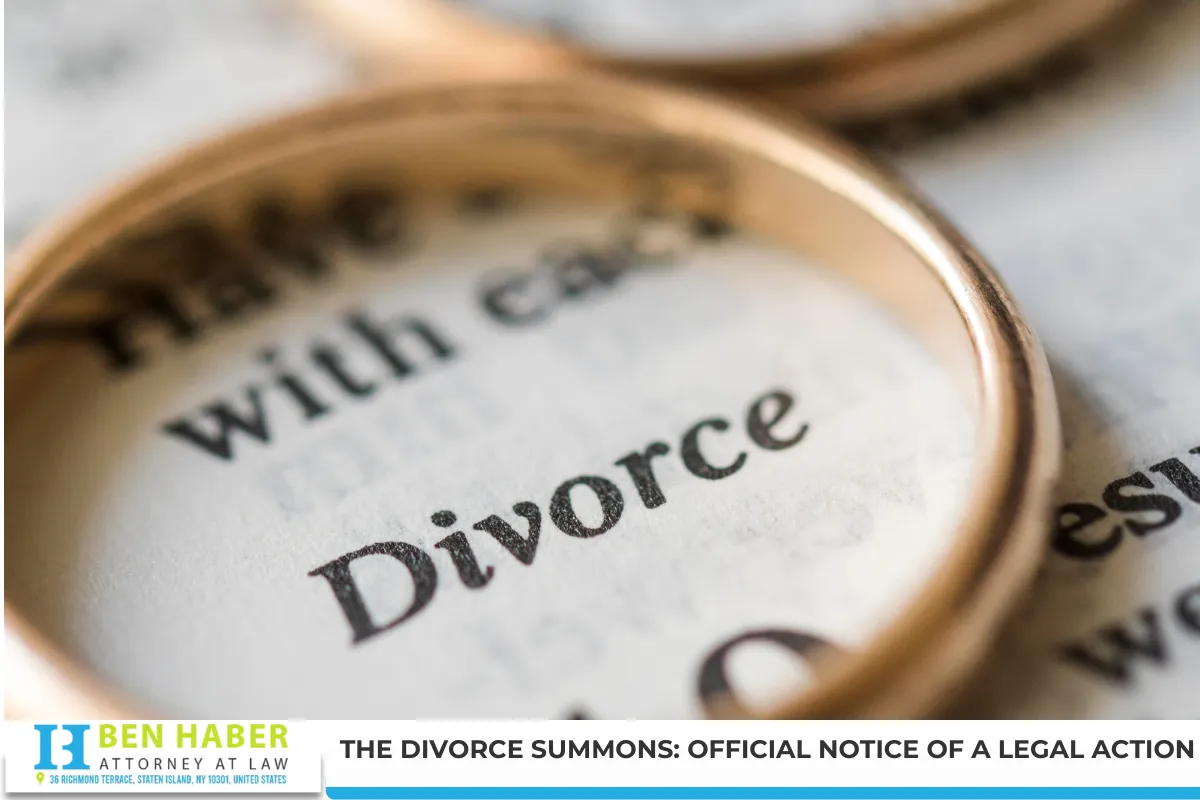
A Divorce Summons is an official document that notifies your spouse that a divorce action has been started in the New York Supreme Court. This document tells your spouse, the “defendant,” that you, the “plaintiff,” have begun a divorce proceeding and must respond within a specific timeframe. It sets the stage for all future legal actions in your divorce case.
Purpose and Legal Power of a Summons
The summons is not just a courtesy—it’s a mandatory, legal step. In Staten Island, the summons is required to be formally served to your spouse, following strict New York legal procedures. Service can’t be by mail or email; it usually must be delivered in person by someone other than you, ensuring your spouse is officially notified.
Contents of the Divorce Summons
The summons includes:
- The names of both spouses
- The court where the case is filed (usually Richmond County Supreme Court for Staten Island residents)
- Index number for your case
- A statement that the marriage is being dissolved
- Directions to respond within 20 days (if served in New York State) or 30 days (if served outside the state)
The summons may be served with or without a verified complaint. If it’s served alone, your spouse can demand the complaint within a certain time.
The Divorce Petition (or Complaint): Explaining the Grounds and Requests
What is a Divorce Petition?
A Divorce Petition (sometimes called a “Complaint for Divorce” in New York) is the document that officially asks the court to dissolve your marriage. Unlike the summons, which merely notifies, the petition outlines why you want a divorce, your legal grounds, and what you’re asking the court to decide—such as child custody, spousal support, and property division.
Key Information in a Divorce Petition
A properly prepared divorce petition includes:
- Names and addresses of both spouses
- Date and place of the marriage
- Details about children (if any)
- The legal grounds for divorce (New York is a “no-fault” state but allows fault-based grounds as well)
- Requests for relief (alimony, custody, property, etc.)
Difference Between Petition and Summons
- Summons: Alerts your spouse and tells them to respond.
- Petition: Explains the details of the divorce and what you want the court to do.
Serving both together is common, but they are separate legal documents with distinct roles.
Starting a Divorce Case in Staten Island: Step-by-Step Process
Filing in the Right Court
In Staten Island, divorces are filed in the Supreme Court of Richmond County. You or your spouse must meet New York residency requirements.
How the Divorce Process Begins
- Preparation: A divorce attorney drafts the Summons and Complaint.
- Filing: These documents are filed with the court clerk, and an index number is purchased.
- Service: The defendant spouse is formally served with the Summons and Complaint.
- Response: The defendant has 20 or 30 days to respond, depending on how they were served.
- Next Steps: If there’s no answer, the case may move to default judgment. If there’s a response, the case proceeds to negotiations or trial.
Read Staten Island Divorce Lawyers: What Documents Are Required to File?
Why Getting the Right Legal Help is Essential
Risks of Doing it Alone
DIY divorce might seem simple, but mistakes in paperwork can cause delays, financial losses, or unfavorable rulings. A skilled divorce lawyer in Staten Island understands the local court rules and can prevent costly errors.
Protecting Your Rights and Interests
A professional divorce attorney ensures:
- Your divorce petition correctly states your needs
- You serve documents legally
- You meet all deadlines
- Your case proceeds smoothly, whether uncontested or contested
This is critical for high-asset cases, complicated custody issues, or if your spouse is uncooperative.
Divorce Summons and Petition: Key Points for Staten Island Residents
Residency Requirements
- Either spouse must have lived in New York State for a certain period, usually one or two years, depending on circumstances.
- The marriage must have occurred in New York, or the grounds for divorce must have arisen in the state, if you haven’t met other residency requirements.
Fault vs No-Fault Divorce
- No-fault divorce: The most common option, stating the marriage has irretrievably broken down for at least six months.
- Fault-based grounds: Includes cruelty, abandonment, imprisonment, or adultery. These must be described in the petition.
Temporary Orders
Your divorce attorney can file motions along with the summons and petition, asking the court for temporary orders about custody, child support, or restraining orders while the divorce case is ongoing.
What Happens After Service: Timeline and Next Steps
Responding to the Summons and Petition
- Answer: The defendant files a written answer, addressing the allegations and demands in the petition.
- Counterclaims: The defendant can also file counterclaims, raising their own grounds for divorce or requests for relief.
Failing to Respond
If your spouse ignores the summons, you can seek a default judgment. This allows the court to grant your requests as stated in the petition.
Court Conferences and Discovery
- Initial court conferences are set after the response.
- Both parties exchange financial information and other relevant evidence in a process called “discovery.”
Common Mistakes to Avoid in Divorce Cases
Incorrect Service of Documents
Improperly serving the divorce summons or complaint can cause your entire case to be dismissed or delayed. Use a professional process server who knows New York divorce law.
Missing Deadlines
Every stage of the divorce process has strict deadlines. Failing to respond, submit documents, or show up in court can severely hurt your case.
Not Asking for Temporary Relief
If you need support or protection during the divorce, don’t wait—your divorce lawyer can request temporary court orders right away.
Special Considerations in Staten Island Divorce Cases
Child Custody and Support
Divorce cases involving children must follow New York child custody and child support guidelines. The petition should clearly state your requests for custody and support.
Property Division
New York follows “equitable distribution,” meaning marital property is divided fairly, not always equally. Your divorce attorney helps you claim your fair share in the petition.
Spousal Support
If you seek maintenance (alimony), your petition must clearly request it and explain your financial need.
Mediation and Settlement Options
Many divorce cases in Staten Island are resolved through mediation or settlement before reaching trial. Discuss these options with your attorney—sometimes you can reach agreements faster and with less stress.
Protecting Your Future with the Right Staten Island Divorce Attorney
The legal details of a divorce summons and petition may seem daunting, but an experienced divorce attorney takes the confusion out of the process. Whether you’re filing first or responding, you deserve skilled guidance to protect your interests and your future.
Benjamin Haber, Staten Island Divorce Lawyers

Are you searching for trusted, experienced Divorce Lawyers in Staten Island? Benjamin Haber, Staten Island Divorce Lawyers, is here to help you every step of the way. Our team is dedicated to making your divorce process as smooth and stress-free as possible. We offer free consultations, quick responses, and bilingual support for your convenience. If you need guidance about your divorce petition or summons, or have questions about New York divorce law, call us today at (718) 442-0960 or fill out our contact form. We proudly serve Staten Island and the surrounding areas, working hard to protect your rights and future.
Frequently Asked Questions
How long does it take to serve a divorce summons and petition in Staten Island?
Typically, the divorce summons and petition must be served within 120 days after filing. In New York, service is usually completed within the first few weeks after your case is filed, but it can take longer if your spouse is difficult to locate. Using a process server or hiring an experienced divorce attorney can help ensure timely and proper service, reducing delays in your divorce proceedings. If your spouse is out of state or cannot be found, your lawyer can help you seek alternative service methods approved by the court.
What happens if my spouse refuses to accept the divorce summons?
If your spouse refuses service, a process server can document their attempts, and you may ask the court for permission to serve the documents in another way, such as by mail or publication. New York courts are familiar with spouses trying to evade service. As long as you follow the correct legal steps, your divorce can proceed even if your spouse refuses to cooperate. It’s important to keep records of every attempt to serve the summons and consult your divorce lawyer for guidance.
Can I file a divorce petition without a lawyer in Staten Island?
Yes, you can file for divorce on your own in Staten Island, but it’s not recommended, especially if your case involves children, property, or disagreements. The paperwork is complex, and a single mistake can delay your divorce or affect your rights. A qualified divorce attorney ensures all documents are correctly prepared and filed, increasing your chances of a smooth process. For many people, legal guidance saves time, stress, and money in the long run.
Is the divorce petition the same as the complaint in New York?
In New York divorce law, the terms “petition” and “complaint” are often used interchangeably, but technically, a “complaint” is used in Supreme Court divorces, while a “petition” is for Family Court matters like child support or custody without divorce. If you’re filing for divorce in Staten Island Supreme Court, you’ll usually file a “Summons with Notice” or “Summons and Verified Complaint.” Your divorce attorney can clarify which form applies to your situation.
How do I respond if I receive a divorce summons and petition?
If you receive a divorce summons and petition, you have 20 days to respond if you were served in New York, or 30 days if served out of state. Your response should address each point in the complaint, and you can file counterclaims or request relief of your own. Failing to respond means your spouse can seek a default judgment, which may not protect your interests. It’s strongly advised to contact a divorce lawyer as soon as possible to ensure your rights are protected and all paperwork is filed on time.
Disclaimer: This article is for informational purposes only and does not constitute legal advice. Divorce laws change frequently, and each case is unique. For advice on your specific situation, consult with a qualified Staten Island divorce attorney.
Read What Should I Bring to My First Meeting With a Staten Island Divorce Attorney?