Why Understanding Your Divorce Options in Staten Island Matters
Staten Island Divorce Lawyers know that choosing between a contested or uncontested divorce is one of the most important decisions you’ll make during this difficult time. The problem is, many people don’t fully understand what each path involves or how it affects their future. This confusion can lead to wasted time, increased stress, and financial strain. The stakes are high—your children, your property, and your peace of mind are all on the line. The good news? When you know the difference between these divorce options and how New York divorce law applies, you can make informed choices for your family. In this article, we’ll break down everything you need to know about divorce cases in Staten Island—so you can move forward with clarity and confidence.
Exploring Divorce in Staten Island: Local Laws and Your Legal Rights
The Foundation of Divorce Law in New York
Divorce in Staten Island falls under New York State law, which recognizes both fault-based and no-fault grounds. Whether you are facing a simple separation or a complicated legal battle, understanding how the law applies to your specific divorce case is essential. Key factors include residency requirements, equitable distribution of marital assets, child custody laws, and spousal support guidelines.
Key Terms Every Staten Island Resident Should Know
- Contested Divorce: A divorce where spouses cannot agree on one or more key issues, requiring court intervention.
- Uncontested Divorce: Both parties agree on all terms, making the process faster and less stressful.
- Equitable Distribution: New York divides marital property fairly, but not always equally.
- Child Custody: Legal and physical custody arrangements that prioritize the child’s best interests.
- Spousal Maintenance: Also known as alimony, this may be awarded based on length of marriage and financial need.
What is a Contested Divorce? When Disagreements Require Court Action
Defining a Contested Divorce
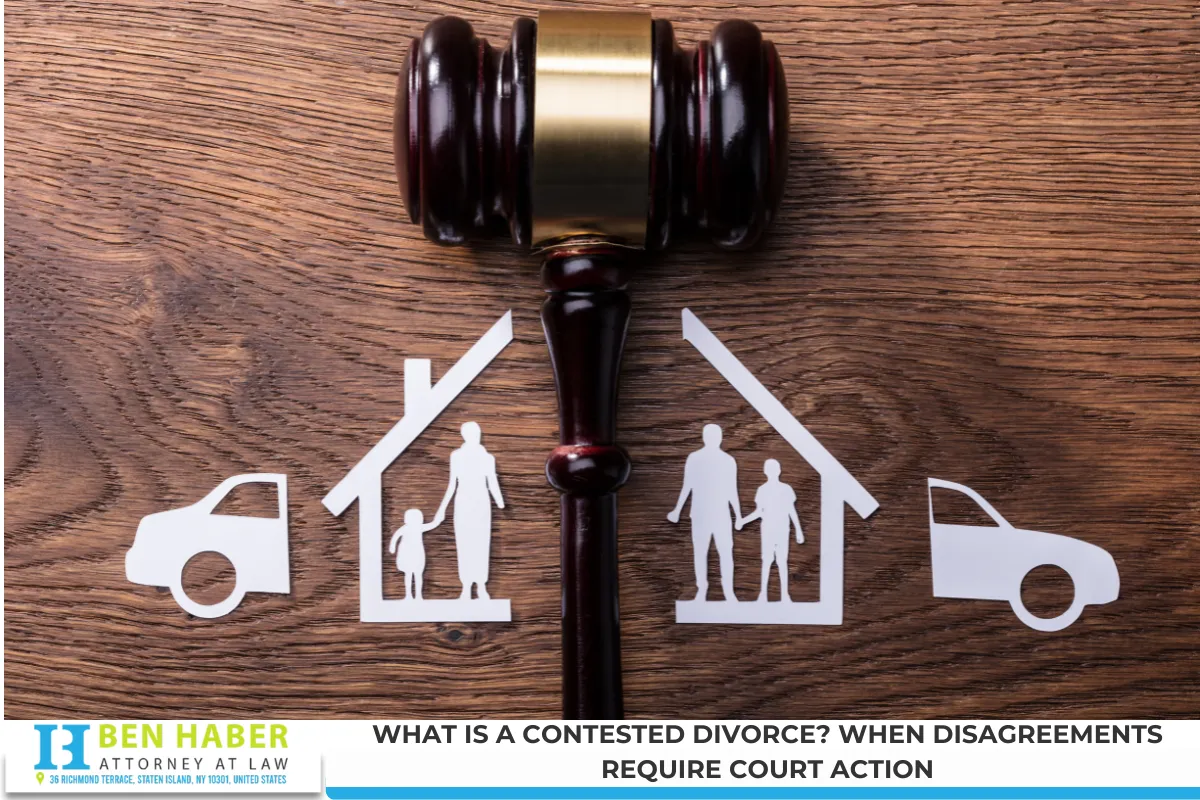
A contested divorce occurs when spouses cannot agree on the important terms of their separation. These disagreements might involve property division, custody of children, child support, or maintenance. In Staten Island, this type of divorce requires both parties to attend court hearings, present evidence, and sometimes participate in a trial.
Common Reasons for Contested Divorces
- Disputes over asset distribution or debts
- Disagreement about custody and visitation
- Conflicting views on support payments
- Allegations of misconduct, abuse, or neglect
The Legal Process for Contested Divorce
- Filing a Complaint: One spouse (the plaintiff) files for divorce in Supreme Court, citing grounds for the action.
- Service and Response: The other spouse (the defendant) receives the summons and files an answer, often disputing claims.
- Discovery Phase: Both parties gather and exchange evidence about finances, property, and parenting.
- Court Conferences and Motions: Preliminary hearings may be held to address urgent matters such as temporary support or custody.
- Settlement Attempts: Most courts encourage negotiation and mediation before trial.
- Trial: If unresolved, the judge hears the evidence and issues decisions on all contested matters.
- Judgment of Divorce: The court’s decision becomes final, legally ending the marriage.
Advantages and Disadvantages of Contested Divorce
Advantages:
- Protects your rights when significant disagreements exist
- Allows for judicial review of complex or contentious issues
Disadvantages:
- Can be lengthy and costly
- Emotional strain on all parties, especially children
- Less privacy, as court records are public
What is an Uncontested Divorce? Reaching Agreement Without a Battle
Defining an Uncontested Divorce
An uncontested divorce means both spouses agree on every aspect of their separation—including asset division, custody, and support. In Staten Island, these cases typically move quickly through the court system, often requiring only paperwork and no court appearances.
Steps to an Uncontested Divorce
- Agreement on Terms: Spouses discuss and resolve all legal and financial matters.
- Preparation of Documents: Legal paperwork is drafted, often with the help of a divorce attorney.
- Filing with the Court: The agreement and required forms are filed with the Supreme Court in Staten Island.
- Judicial Review: A judge reviews the agreement to ensure it meets legal standards and is fair.
- Final Decree: Once approved, the divorce becomes official.
Benefits of Choosing Uncontested Divorce
- Faster and less expensive than a contested divorce
- Reduces emotional stress and public exposure
- Greater control over the final agreement
- Minimizes conflict, which can be important if children are involved
Read Staten Island Divorce Lawyers: What Are Common “fault” Grounds Like Adultery or Cruelty?
Contested vs. Uncontested Divorce: Key Differences to Consider
Legal Complexity
Contested divorces involve more court appearances, legal motions, and often require extensive negotiation or trial. Uncontested divorces, by contrast, are typically straightforward and administrative.
Cost and Time
Contested divorces often take several months or even years and can become expensive due to court fees, attorney costs, and expert witnesses. Uncontested divorces are usually resolved within a few months and are far more cost-effective.
Privacy and Stress Levels
Contested divorce cases become part of the public record and can be emotionally draining. Uncontested divorces tend to offer more privacy and significantly less conflict.
Impact on Children and Family Dynamics
Lengthy court battles can negatively affect children, leading to stress and uncertainty. Reaching an amicable agreement through an uncontested divorce helps maintain stability and fosters healthier co-parenting relationships.
Factors to Consider When Deciding Between Contested and Uncontested Divorce
Communication and Cooperation Between Spouses
If you and your spouse can communicate openly and compromise, an uncontested divorce is often possible. Where trust or communication is lacking, contested proceedings may be necessary to protect your interests.
Complexity of Financial Assets
Couples with high-value assets, businesses, or complicated debts often require a more detailed legal process. An experienced divorce lawyer can provide guidance and protect your financial future.
Child Custody and Support Concerns
If custody or support is contested, the court may intervene to ensure the child’s best interests are protected. New York courts follow established guidelines to determine fair outcomes.
Risk of Domestic Violence or Abuse
When safety is a concern, legal protections such as restraining orders and supervised custody exchanges may be needed. In these cases, it is critical to work with a knowledgeable family law attorney.
The Role of Divorce Lawyers in Staten Island: Why Legal Representation Matters
Navigating the Divorce Process with Confidence
A skilled divorce attorney helps you understand your rights, gathers evidence, negotiates with the other party, and represents you in court when necessary. In Staten Island, local attorneys are familiar with the unique procedures and expectations of Richmond County Supreme Court.
Protecting Your Interests
A divorce lawyer ensures that your interests—whether financial, parental, or emotional—are fully protected throughout the process. This includes preparing accurate legal documents, representing you in mediation, and advocating for your needs during court proceedings.
Avoiding Common Mistakes
Mistakes in filing paperwork or missing deadlines can delay your case or result in unfavorable outcomes. Working with an experienced legal professional minimizes these risks and helps ensure a smoother process.
Essential Steps to Take Before Filing for Divorce in Staten Island
Organize Your Financial Information
Gather documentation related to assets, debts, income, and expenses. This includes bank statements, tax returns, retirement accounts, and property deeds.
Prioritize the Well-Being of Your Children
Consider child custody arrangements and how you can work together to support your children during and after divorce.
Consult With an Experienced Divorce Attorney
Early legal advice can help you understand your options, estimate the likely cost and duration of your divorce, and avoid costly mistakes.
Common Myths About Divorce in Staten Island
“All Divorces Go to Trial”
Many believe every divorce ends in a lengthy courtroom battle. In reality, most cases are settled outside of court, especially when both parties work with skilled divorce lawyers.
“Mothers Always Get Custody”
New York law prioritizes the best interests of the child, not the gender of the parent. Both mothers and fathers can be awarded custody, depending on the circumstances.
“Assets Are Always Split 50/50”
Equitable distribution means assets are divided fairly, not always equally. The court considers factors like income, health, length of marriage, and future needs.
Contact Benjamin Haber, Staten Island Divorce Lawyers

If you’re seeking trusted divorce lawyers in Staten Island, Benjamin Haber and his team are here to guide you every step of the way. Our experienced attorneys handle both contested and uncontested divorce cases with professionalism, care, and attention to detail. We are conveniently located at 36 Richmond Ter Suite 301, Staten Island, NY 10301, and serve clients throughout Staten Island and surrounding areas. Whether you’re facing a complex family law matter or need clear answers about your options, we provide responsive support and practical solutions. Call us today at (718) 442-0960 or visit our website to fill out our secure contact form. Take the next step with confidence and let us help protect your future.
Frequently Asked Questions
How long does it take to finalize a divorce in Staten Island?
The time it takes to finalize a divorce depends on whether the case is contested or uncontested. Uncontested divorces in Staten Island can be completed in as little as three to six months, provided all paperwork is filed correctly and there are no unexpected complications. Contested divorces, on the other hand, may take a year or more due to court schedules, discovery, and negotiations. Factors such as the complexity of assets, child custody disputes, and court backlogs can also affect the timeline.
What are the residency requirements for filing for divorce in Staten Island, NY?
To file for divorce in Staten Island, at least one spouse must meet New York State residency requirements. Generally, this means one or both spouses must have lived in New York for at least one year before filing. Other scenarios, such as if the marriage took place in New York or the grounds for divorce occurred in the state, may also meet requirements. An attorney can help clarify your eligibility based on your specific situation.
Do both spouses have to agree to get an uncontested divorce?
Yes, both spouses must agree on all terms of the divorce—including division of assets, custody, child support, and spousal maintenance—to qualify for an uncontested divorce in Staten Island. If there is disagreement on any point, the divorce will be considered contested and may require court intervention.
How does the court decide child custody in Staten Island divorces?
The court’s primary concern is the best interests of the child. Factors considered include each parent’s ability to provide for the child’s needs, the child’s relationship with each parent, any history of domestic violence, and the child’s wishes (depending on age and maturity). The court may award joint or sole custody based on what is deemed most beneficial for the child.
What if my spouse does not respond to the divorce papers?
If your spouse fails to respond after being properly served with divorce papers, you may be able to obtain a default judgment from the court. This allows your divorce to proceed without the other party’s participation, but you must follow all legal requirements for service and notification. Consulting with a knowledgeable divorce attorney ensures the process is handled correctly and efficiently.
Disclaimer: This article is for informational purposes only and does not constitute legal advice. For personalized legal guidance regarding your divorce, consult an experienced family law attorney licensed in New York.
Read Staten Island Divorce Lawyers: What Documents Are Required to File?